... That Lincoln has been known as “Nip Town” and its “birth” came after 20 years of hard labor?
What we now know as the town of Lincoln was formed from parts of Concord, Lexington, and Weston, all nipped off to create a new town.
1734 - The labor begins.
Citing wretched roads and the distance to mandatory church services, neighbors who were residents of Lexington, Concord, and Weston all petitioned their own communities to be allowed to create a separate township. Each town said “No.”
1740 - The labor continues.
The same residents again petitioned, this time not asking for a separate town but only for a second precinct of Concord. Creation of a precinct meant the residents would impose taxes upon themselves to build their own meeting house and pay their own minister. Again, they were met with a flat “No.”
1744 - Still the labor continues…
Frustrated with rejections by their own towns, 46 of these neighbors instead petitioned the Great and General Court to allow the creation of a Second Precinct of Concord.
1745 - Anticipation of delivery…
Edward Flint donated land for the construction of a meeting house, and Ephraim Flint donated land for burials.
1746 - Delivery is promised…
The General Court approved creation of a Second Precinct. Concord town records occasionally refer to the Second Precinct as “Flint’s Precinct.”
1747 - Delivery approaches...
The construction of the new meeting house was completed. The men of the Second Precinct elected their first officers—Assessors, a Collector of Taxes, a Treasurer, a Clerk, and a Precinct Committee. The residents’ frustration persisted, however, as Concord still refused to provide funds for constructing roads to the new meeting house.
1753 - One more push…
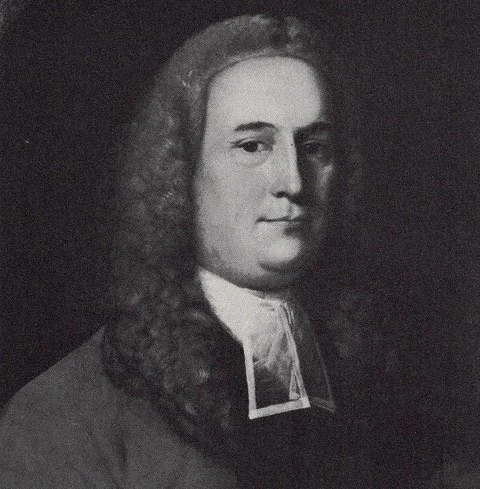
Judge Chambers Russell
Residents once again petitioned to become a separate town. Once again Lexington, Weston, and Concord refused.
But, the politics of the day and a wealthy and politically connected resident, Chambers Russell, provided an opening. Russell had held a seat representing Concord in the Great and General Court where he was a supporter of the Governor, William Shirley. But then Russell lost his seat in an election, and Shirley lost a much-needed ally.
Shirley was known for his opposition to the creation of new towns. But if a new town where Russell lived were created, Russell might be elected to the General Court in this new town, and Shirley would regain his ally.
1754 - A new town is born!
A petition to create the new town was presented to the General Court on March 28, 1754, and was approved on April 19, 1754.
Chambers Russell was asked to name this new town. He chose “Lincoln,” a nod to his family’s roots in Lincolnshire, England. So, the grit and determination of Lincoln’s residents over 20 years, led by the Flints, plus the political clout of the country gentleman, Chambers Russell, gave birth to what we now know as Lincoln.
Happy 272nd birthday, Lincoln!
Sara Mattes
The Lincoln Historical Society
Do you like what you’re reading? Please support our efforts!
LHS receives no town funding & relies completely on charitable giving.
Consider becoming a Member , Donating , or Volunteering to sustain our work.
Thank you!